
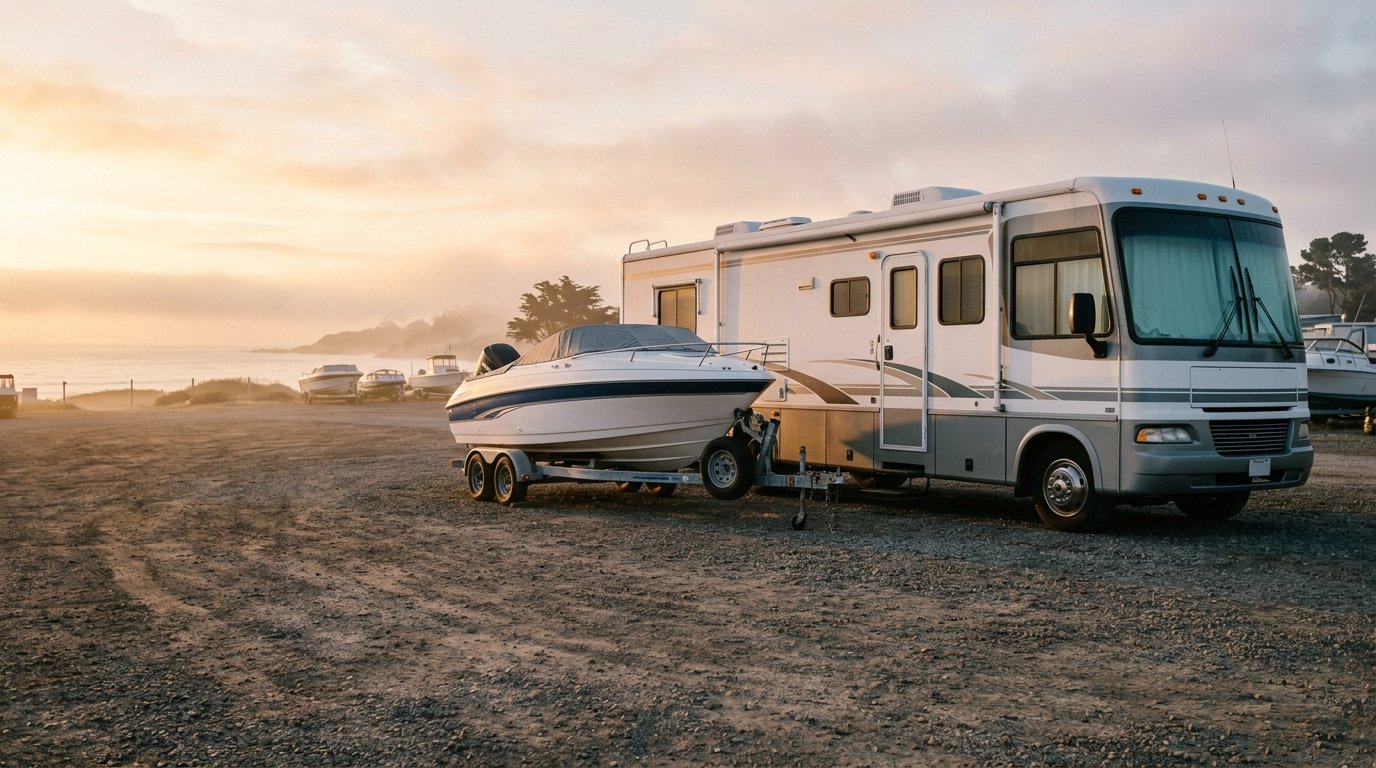
RV & boat
RV, Motorhome And Boat Transport
Recreational vehicles are awkward freight. They are tall, wide, often heavy, and frequently sitting after months of storage. The method depends far more on dimensions than on what the vehicle is called.
- Drive-away or trailered
- Height & width assessed
- Boats on trailers
- Permits where needed
Drive-away or trailered
There are two ways to move a recreational vehicle and the choice usually makes itself once you know the dimensions.
Drive-away means a qualified driver operates the RV under its own power to the destination. It suits large, roadworthy motorhomes where loading onto a trailer would push the combined height past legal limits. It adds mileage to the vehicle, which matters to some owners more than others.
Trailered transport puts the unit on a carrier. It suits travel trailers, fifth wheels, campers, boats and any motorhome that is not currently roadworthy. Nothing is added to the odometer, but the loaded height must stay legal, which is exactly why we ask for the real figures rather than a rough guess.
What we move
Anything recreational that will not fit on a standard car carrier.
-
01
Class A motorhomes
Large coaches usually moved drive-away, since trailered height would exceed legal limits on most routes.
-
02
Class B and C
Camper vans and cab-over units, moved either way depending on their exact height and roadworthiness.
-
03
Travel trailers
Towed units of all sizes, with hitch type and axle configuration confirmed before dispatch.
-
04
Fifth wheels
Larger towables needing a properly equipped tow vehicle and a driver used to handling them.
-
05
Boats on trailers
Trailered watercraft, with beam width the usual limiting factor rather than length or weight.
-
06
Truck campers
Slide-in units, moved on their host vehicle or separately depending on how they are mounted.
Preparing a recreational vehicle
Units that have been standing cause most of the delays we see.
-
1
Measure properly
Height, width and length as it will travel, including antennas, air conditioners and slide-outs.
-
2
Secure the interior
Latch cabinets, empty tanks, secure loose items and turn off gas at the bottle.
-
3
Mechanical check
For drive-away, tyres, brakes, lights and fluids must be roadworthy. For towables, check bearings and lights.
-
4
Document condition
Photograph inside and out before collection, including the roof if you can safely reach it.
Boats and the beam problem
With boats, length is rarely the issue. Beam width is. A hull wider than 8 feet 6 inches becomes an oversize load and needs permits in every state it crosses, sometimes with escorts and daylight-only travel restrictions.
Height matters too, and it is the part people forget. A boat sitting on its trailer with a tower, arch or windscreen fitted can easily exceed 13 feet 6 inches once the trailer deck is added. Removing a tower before transport is often cheaper than permitting the extra height.
Shrink-wrapping is worth considering on long routes, particularly in winter. It protects gel coat and upholstery from road salt and weather, and we can coordinate it as part of the booking rather than leaving you to arrange it separately.
Not sure of your dimensions?
Send the make, model and year and we will look up the published figures, then confirm what changes once it is loaded.
Check my routeWhat affects RV and boat transport pricing
Size drives the price here far more than distance does.
- 1
DimensionsAnything over legal width or height triggers permits, and the cost climbs with each state crossed.
- 2
Drive-away or traileredDifferent cost structures entirely, and the cheaper option depends on the specific unit.
- 3
RoadworthinessA unit that cannot be driven must be trailered, which removes the cheaper option on large motorhomes.
- 4
SeasonSpring and autumn are peak movement periods for recreational vehicles and capacity tightens.
- 5
Access at both endsStorage yards, marinas and campgrounds vary hugely in how easily a large rig can get in and out.
Quotes are based on the dimensions you supply. Measure the unit as it will travel, since a figure taken from a brochure rarely matches what is actually on the road.
RV and boat transport questions
Should my motorhome be driven or trailered?
Large Class A coaches are usually driven, because trailering them would exceed legal height. Smaller units and anything not currently roadworthy is trailered. Send us the dimensions and condition and we will confirm which applies.
Does drive-away add mileage to my RV?
Yes. A qualified driver operates the vehicle to the destination, so the route distance goes on the odometer. If that matters to you, say so early and we will look at trailered options instead.
Can you move an RV that does not run?
Yes, but it must be trailered rather than driven. Tell us at quote stage so we assign the right equipment, and let us know whether the wheels turn freely.
How wide can a boat be before it needs permits?
Generally anything over 8 feet 6 inches of beam is an oversize load requiring permits in each state crossed. Wider loads may also need escort vehicles and daylight-only travel.
Should I shrink-wrap my boat for transport?
It is worth it on long routes and in winter. Wrapping protects gel coat and upholstery from road salt and weather, and we can coordinate it as part of the booking.
What should I do before collection?
Empty the tanks, latch the cabinets, secure or remove loose items, turn off the gas at the bottle and retract any slide-outs. Photograph the unit inside and out before the driver arrives.
Moving an RV or boat?
Send the make, model, year and dimensions. We will confirm whether it is driven or trailered and whether permits apply.
Related services
Routes & pricing
Car shipping routes across all 50 states
We run every lane in the country, open and enclosed, door to door. Pick a state to see distance, price range and transit time for your route.
Click a state to build your route