Motorcycle transport
Motorcycle Shipping Done The Right Way
A motorcycle has two contact patches, no parking brake worth relying on, and bodywork that marks if a strap sits wrong. It is not a small car, and it should not be loaded like one.
- Wheel chock secured
- Soft strap tie-downs
- Open or enclosed
- Single bikes or collections
Why bikes need their own method
Cars sit still on their own. A motorcycle does not. It has to be held upright through every corner, every braking event and every expansion joint for the entire journey, which is why the securing method matters more than anything else in the process.
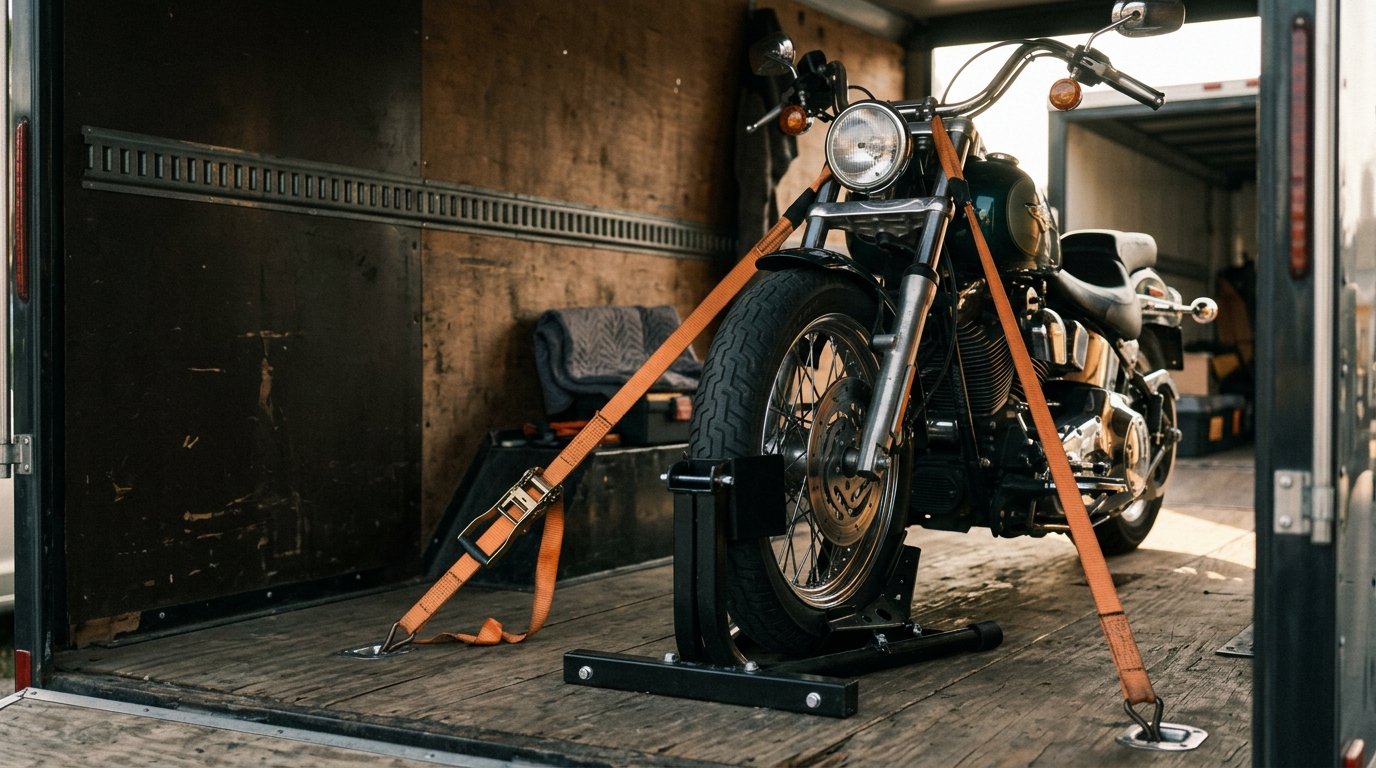
Done properly, the front wheel goes into a chock that locks it straight, and soft straps compress the suspension evenly from both sides so the bike cannot rock. Done badly — a strap over a fuel tank, a chain around a frame rail, a bike leaning on its side stand in a corner of the trailer — you get scratched paint, bent levers, and sometimes a bike lying down when the doors open.
We only assign carriers who move bikes regularly and carry the right equipment for it.
How your bike is handled
The details that decide whether it arrives exactly as it left.
-
01
Front wheel chock
The wheel is locked straight before any strap goes on, so the bike cannot pivot or drop during transit.
-
02
Even soft strap tension
Straps run to solid anchor points on both sides, compressing suspension evenly rather than pulling the bike sideways.
-
03
No straps over bodywork
Nothing crosses tanks, fairings or plastics. Contact points are protected where a strap has to pass close.
-
04
Enclosed option
Recommended for customs, restorations and anything with paint you cannot replace on a weekend.
-
05
Crating for high value
Individual crating is available where a bike warrants complete isolation from everything else on the load.
-
06
Condition documented
Photographed and recorded at both ends, so any question is answered by evidence rather than recollection.
Preparing your motorcycle for transport
Ten minutes of preparation prevents most of the problems we see.
-
1
Drop the fuel level
A quarter tank or less. Full tanks add weight and increase the risk of fumes and spillage in a sealed trailer.
-
2
Remove loose items
Take off top boxes, GPS units, screens and anything that can vibrate free. Fold or remove mirrors where possible.
-
3
Check tyres and battery
Correct tyre pressure helps the chock hold properly. Note any battery issues so nobody is caught out at delivery.
-
4
Photograph everything
Take clear photos from all angles in daylight before collection. It takes two minutes and settles any dispute instantly.
Open or enclosed for a motorcycle
A standard road bike travelling in reasonable weather is generally fine on an open load, secured properly and often with a cover. It is the cheapest way to move a bike and it is what most riders choose.
Enclosed makes sense for a shorter list: custom paint, restored classics, competition machines, anything with chrome that will spot in road salt, and bikes moving in winter across northern routes. Enclosed also means the bike is out of sight, which matters more for motorcycles than for cars.
Collections are worth planning as one job. If several bikes are moving between storage, a show or a new address, a single trailer and one schedule beats booking them separately on both cost and coordination.
Moving more than one bike?
Send the list with rough dimensions. Multiple units on one trailer almost always price better per bike than separate bookings.
Check my routeWhat decides a motorcycle shipping quote
Bikes are cheaper to move than cars, but the same forces apply.
- 1
Distance and laneBusy interstate corridors price lower per mile than rural collections well off the main routes.
- 2
Trailer typeEnclosed costs more than open, and crating adds to that again where it is genuinely needed.
- 3
Size and weightA full dresser tourer takes considerably more deck space than a naked middleweight.
- 4
Number of bikesMultiple units on one trailer share the trip cost and reduce the price for each.
- 5
SeasonRiding season and rally weeks tighten capacity on the routes heading toward the event.
Prices are estimates until a carrier is assigned. Nothing is charged before that point, and the quoted figure is the one we intend to dispatch at.
Motorcycle shipping questions
How is my motorcycle secured inside the trailer?
The front wheel goes into a chock that holds it straight, then soft straps run to anchor points on both sides, compressing the suspension evenly. Nothing crosses the tank or bodywork, and contact points are protected.
Should I choose open or enclosed for a bike?
Open is fine for most road bikes in reasonable conditions and costs noticeably less. Choose enclosed for custom paint, restorations, competition machines, chrome-heavy bikes, or any winter move across northern routes.
How much fuel should be in the tank?
A quarter tank or less. It reduces weight and limits fumes in an enclosed trailer. Do not drain it completely, as the bike may need to be moved short distances during loading.
Can you ship a non-running motorcycle?
Yes. Tell us at quote stage so the carrier brings the right loading equipment. A bike that will not roll needs different handling from one that simply will not start.
Do you crate motorcycles?
We can arrange crating for high-value or particularly delicate bikes. It costs more and adds a little time, but it isolates the machine completely from everything else on the load.
Can I leave luggage or a top box fitted?
Remove them. Loose or bolt-on items vibrate free, chafe paintwork, and are not covered by cargo insurance. Take off screens, GPS units and anything else that can be knocked in transit.
Ship your bike with people who move bikes
Send us the make, model and both ZIP codes. You will have a written price with no deposit and no obligation.
Related services
Routes & pricing
Car shipping routes across all 50 states
We run every lane in the country, open and enclosed, door to door. Pick a state to see distance, price range and transit time for your route.
Click a state to build your route