Auction transport
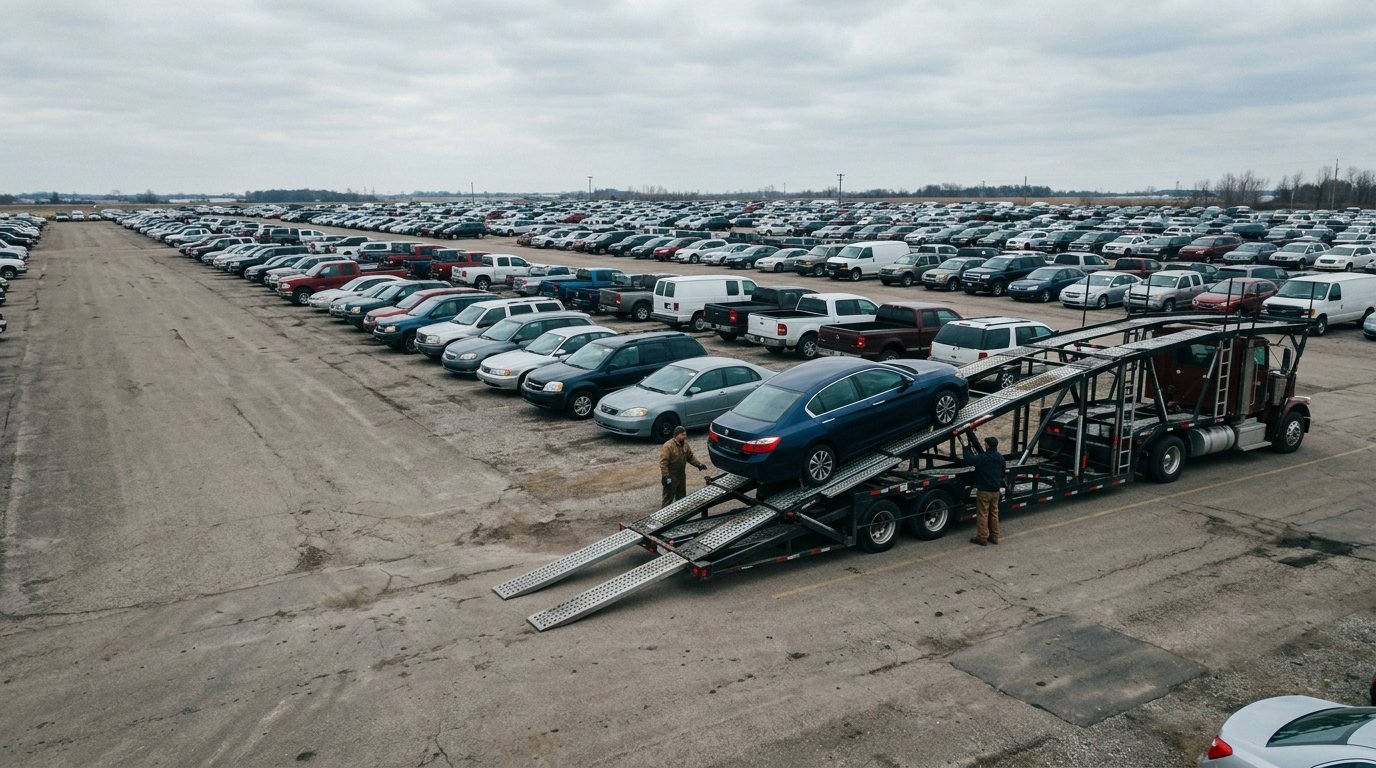
Auto Auction Transport And Vehicle Collection
Auction sites run on their own rules. Release windows, gate passes, storage clocks that start ticking the moment the hammer falls. Getting a car out cleanly is mostly about paperwork, not driving.
- Major auction sites
- Gate pass handled
- Non-running units
- Storage clock managed
Why auction pickups go wrong
Almost every failed auction collection comes down to the same three things: the release paperwork was not ready, the buyer number did not match, or the truck arrived outside the gate hours.
Auction yards are not casual about this. A driver without the correct gate pass and buyer reference will be turned away regardless of how far they have travelled, and the storage clock keeps running while that gets sorted out. Those daily fees are small individually and unpleasant in aggregate.
We collect from auction sites regularly, so we ask for the right details at booking rather than discovering the gap on collection day.
How we handle auction collections
The work is in the preparation, not the drive.
-
01
Paperwork checked first
Buyer number, lot number and release authorisation confirmed before a truck is dispatched, not on arrival.
-
02
Release windows respected
We schedule inside the yard's actual gate hours so drivers are not sitting outside a closed site.
-
03
Storage clock watched
We prioritise collections where free storage days are running down, because those fees add up quickly.
-
04
Non-running units
Auction stock frequently does not start. Tell us and we assign a winch-equipped carrier from the outset.
-
05
Condition documented
Recorded at collection, which matters more here because the vehicle's history before pickup is often unclear.
-
06
Multiple lots together
Several units from the same sale move on one trailer, which is cheaper and simpler than separate bookings.
From winning bid to delivery
Start this the day you win, not the day storage fees begin.
-
1
Send the sale details
Yard location, buyer number, lot or VIN, and whether the unit runs and drives.
-
2
We verify release
We confirm the vehicle is cleared for release and identify the gate hours before dispatching a truck.
-
3
Collection
The driver presents the pass, collects the unit, documents its condition and loads it.
-
4
Delivery
To your lot, your driveway or a body shop. You inspect against the collection record and sign.
Buying online from a distance
Online auction buying has made it normal to purchase a vehicle you have never physically seen, often in a state you have never visited. That works well until collection, where the practical realities land all at once.
Two things catch people out. First, storage fees begin almost immediately and are charged per day, so a week spent arranging transport costs real money. Second, the condition report you bid on is not always what the driver finds. Vehicles with undisclosed damage or that will not roll need different equipment than expected.
Book transport as soon as you win rather than after the invoice clears. Even a provisional booking secures a slot and starts the paperwork moving.
Just won a lot?
Send the yard, buyer number and lot number now. Booking early keeps storage fees down even if the collection is a few days out.
Check my routeWhat affects auction transport pricing
Auction lanes have pressures that ordinary routes do not.
- 1
Sale week demandMajor sale weeks pull carriers toward the site and tighten capacity across that region.
- 2
Running conditionNon-running units need a winch and a carrier equipped for it, which narrows the pool.
- 3
Yard locationAuction sites well away from interstate corridors cost more to reach than those beside them.
- 4
Units per collectionSeveral lots from the same sale share the trip cost and reduce the rate for each.
- 5
Collection urgencyA tight deadline driven by the storage clock prices higher than a flexible window.
We quote before dispatch and do not add fees afterwards. Auction storage charges are billed by the yard directly and are outside our control.
Auction transport questions
Which auction sites can you collect from?
We collect from major auction houses and independent yards nationwide. Give us the exact site location rather than just the city, since large operators run several yards in the same metro area.
What paperwork do you need to release the vehicle?
Typically the buyer number, the lot number or VIN, and a gate pass or release authorisation. Requirements vary by operator, so send what you have and we will confirm what is missing.
Can you collect a vehicle that does not start?
Yes, provided it rolls, steers and brakes. Tell us at booking so we assign a winch-equipped carrier. A unit that will not roll at all needs different equipment again.
How quickly can you collect after I win?
Often within a few days, depending on the yard's release process and carrier availability in that region. Book as soon as you win rather than after the invoice clears, since storage fees usually start immediately.
Who pays the auction storage fees?
The buyer pays them directly to the auction house. They are not part of our quote, which is exactly why we prioritise collections where the free period is running out.
Can you collect several lots from one sale?
Yes, and it is significantly cheaper than separate bookings. Send us the list of lot numbers and we will plan them onto a single trailer where the timing allows.
Get your auction purchase moving
Send the yard, buyer number and lot details. We will confirm release requirements and quote before dispatch.
Related services
Routes & pricing
Car shipping routes across all 50 states
We run every lane in the country, open and enclosed, door to door. Pick a state to see distance, price range and transit time for your route.
Click a state to build your route