Heavy haul
Heavy Equipment Transport And Machinery Hauling
Once a load passes legal width, height or weight limits it stops being a transport booking and becomes a permitted movement. Different trailers, different routes, and paperwork that has to be right before anything moves.
- Lowboy & RGN trailers
- Permits arranged
- Escort vehicles
- Route surveys
Why heavy haul is a separate discipline
A standard trailer has a legal envelope: roughly 8 feet 6 inches wide, 13 feet 6 inches tall and 80,000 lbs gross. Stay inside it and a truck can drive more or less anywhere. Step outside it and every state along the route needs to issue a permit, sometimes with specified travel days, daylight-only restrictions and mandatory escort vehicles.
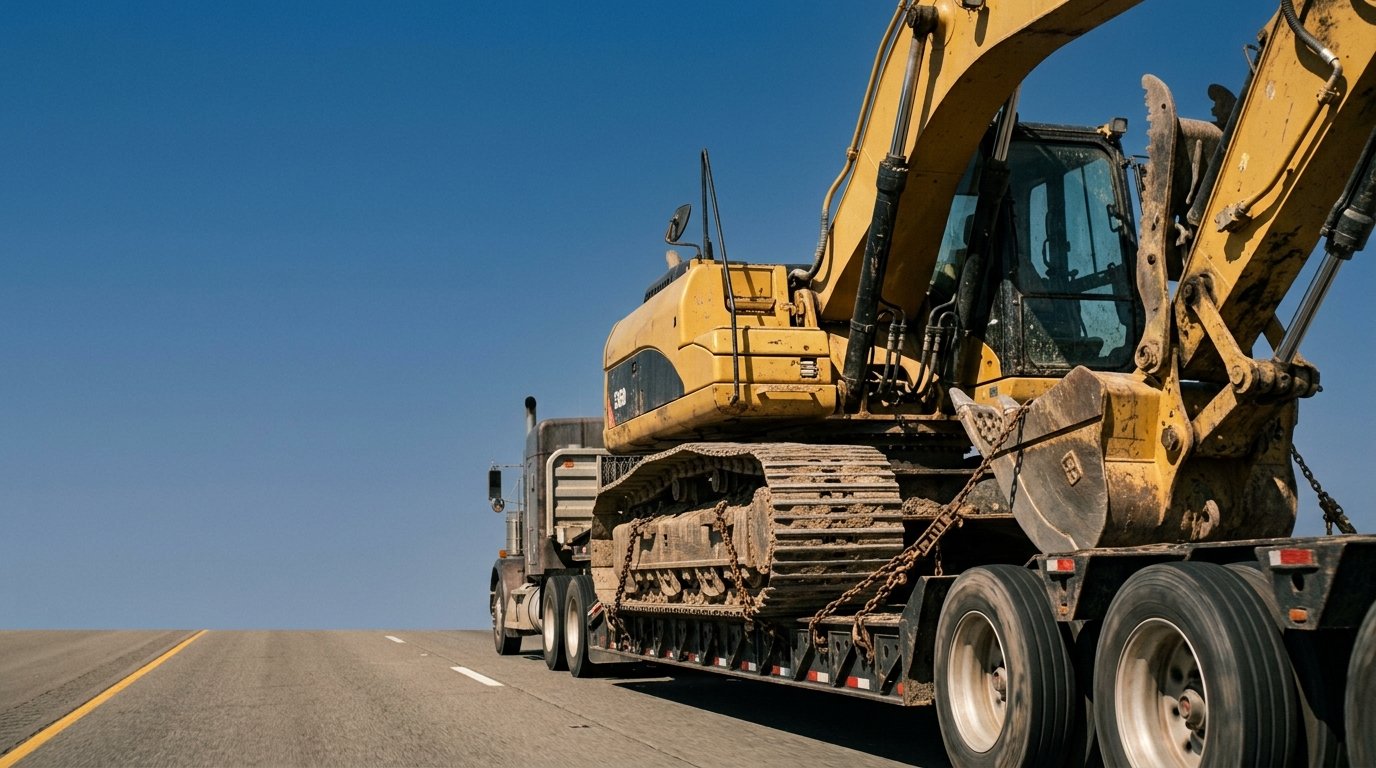
The trailer changes too. Lowboys and removable gooseneck trailers drop the deck height so tall machines clear bridges, and let tracked equipment drive on at ground level rather than up a ramp. Deck ratings, axle configuration and tie-down points all have to match the machine.
None of this is guesswork. Give us the real dimensions and weight and we will tell you exactly what the move requires before quoting.
Equipment we move
If it is too heavy or too wide for a standard trailer, it belongs here.
-
01
Excavators and diggers
Tracked machines from mini excavators up to large units requiring RGN trailers and permitted routing.
-
02
Skid steers and loaders
Compact machines that often move alongside attachments, which need securing separately on the deck.
-
03
Tractors and farm machinery
Agricultural equipment where width is usually the limiting factor rather than weight.
-
04
Dozers and graders
Heavy tracked units that almost always require permits and frequently escort vehicles.
-
05
Forklifts and telehandlers
Warehouse and site machinery, including units with fixed masts that create height problems.
-
06
Industrial machinery
Generators, compressors, containers and plant, crated or on skids, with defined lift points.
How a heavy haul move is arranged
Most of the work happens before the truck leaves.
-
1
Specification
Exact dimensions and operating weight. Estimates cause permit problems, which cause expensive delays.
-
2
Trailer and route
We select the trailer type and survey the route for bridge heights, weight limits and turning restrictions.
-
3
Permits and escorts
State permits are applied for and escort vehicles arranged where the dimensions require them.
-
4
Loading and delivery
Loaded at ground level or by ramp depending on the machine, secured to spec and delivered to the site.
Site access is where jobs actually fail
The road part of heavy haul is usually the predictable bit. The problems happen at the two ends.
Soft ground will bog a loaded lowboy in minutes. A yard entrance with a tight radius cannot be negotiated by a 90-foot combination regardless of the driver's skill. Overhead cables, low canopies and site gates all create height issues that are invisible on a map.
Tell us honestly what the access looks like at both ends, including ground conditions after rain. A photograph of the entrance is worth more than any description, and it costs nothing compared to a truck that arrives and cannot get in.
Not sure if you need permits?
Send the machine's dimensions and operating weight. We will confirm whether the load is legal or permitted before quoting.
Check my routeWhat drives heavy haul pricing
Weight and width matter more than distance on most of these moves.
- 1
Dimensions and weightOnce you exceed legal limits, permit costs and routing restrictions enter the price directly.
- 2
Trailer requiredLowboys and RGNs cost more to operate than flatbeds, and there are fewer of them available.
- 3
Permits per stateEvery state crossed issues its own permit, each with its own fee and conditions.
- 4
Escort requirementsWide or tall loads may need one or more pilot vehicles, sometimes with police escort.
- 5
Site accessDifficult ground, tight entrances or crane assistance all add real cost to the job.
Heavy haul quotes depend on verified dimensions and weight. Figures supplied by the customer are used as given, so an inaccurate weight can invalidate a permit and stop the load.
Heavy equipment transport questions
Do I need a permit to move my machine?
It depends on the loaded dimensions and weight. Broadly, anything over about 8 feet 6 inches wide, 13 feet 6 inches tall or 80,000 lbs gross needs permits in each state crossed. Send us the figures and we will confirm.
What is the difference between a lowboy and an RGN?
Both drop the deck to reduce loaded height. A removable gooseneck detaches at the front so the deck lowers to the ground and tracked machines drive on directly, rather than climbing ramps.
Can you move equipment that does not run?
Yes, but tell us in advance because it changes the loading method entirely. A machine that cannot move under its own power needs winching or crane assistance arranged beforehand.
How far ahead should I book a permitted move?
Allow one to two weeks where possible. State permits take time to issue, some restrict travel to specific days or daylight hours, and escort vehicles need booking in advance.
Do you handle loading at the site?
The driver secures the load to specification. Whether the machine is driven on or requires a crane depends on the equipment, and we agree that before the truck is dispatched.
What happens if my weight figure is wrong?
Permits are issued against the declared weight. An inaccurate figure can invalidate the permit at a weigh station and stop the load mid-route, so use the operating weight from the machine plate rather than a memory or a brochure.
Moving a machine?
Send the make, model, dimensions and operating weight. We will confirm the trailer, permits and route before quoting.
Related services
Routes & pricing
Car shipping routes across all 50 states
We run every lane in the country, open and enclosed, door to door. Pick a state to see distance, price range and transit time for your route.
Click a state to build your route